Casa Arquitectura Madrid
Madrid
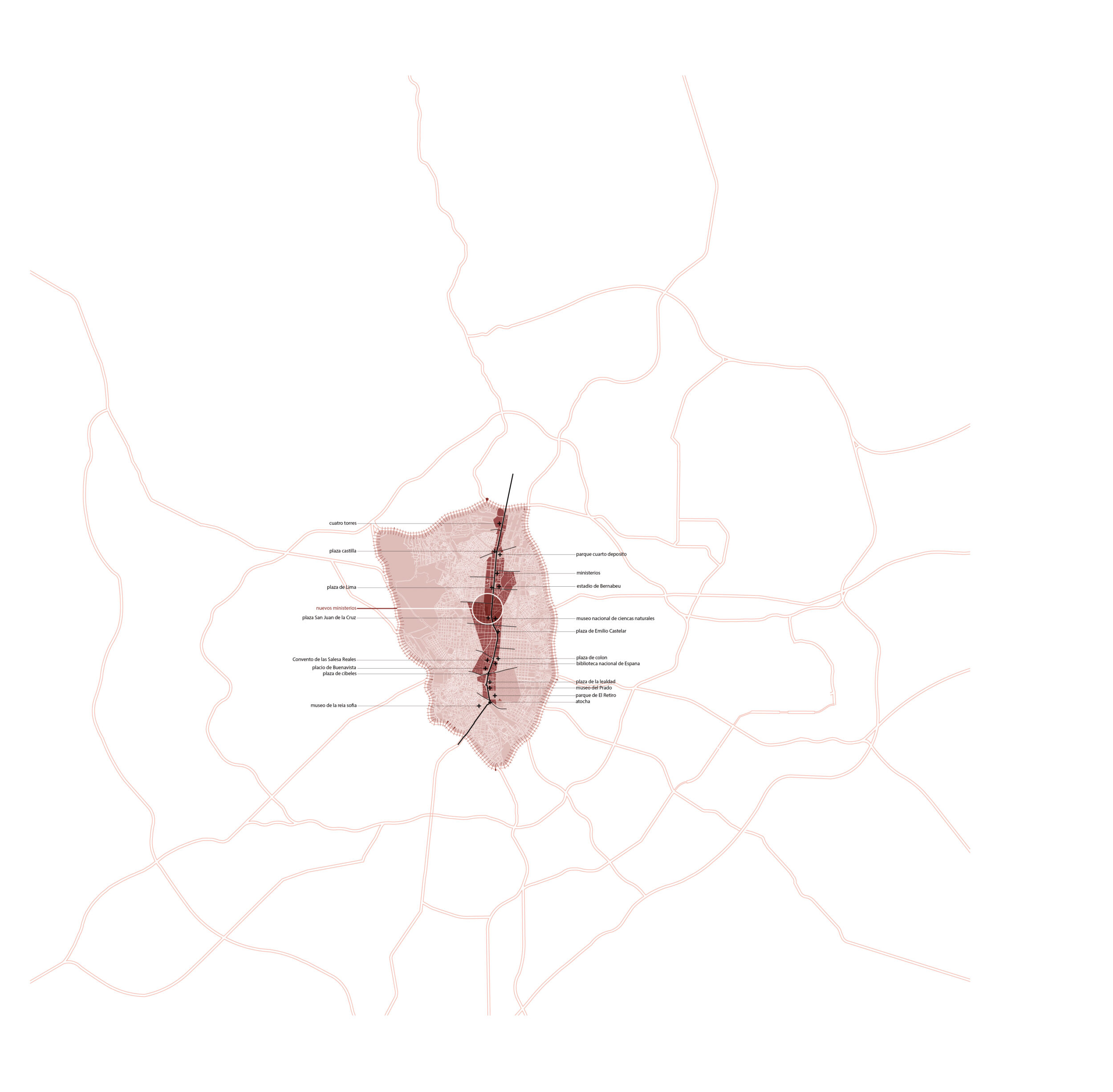
The Nuevos Ministerios square, an urban paradox balancing intrinsic qualities and structural flaws—functioning as an immense parking lot despite its position along Madrid’s major North-South axis—is reinterpreted as an urban palimpsest. Here, multiple layers of intervention overlap and intertwine to transform it into a true center of metropolitan attraction.
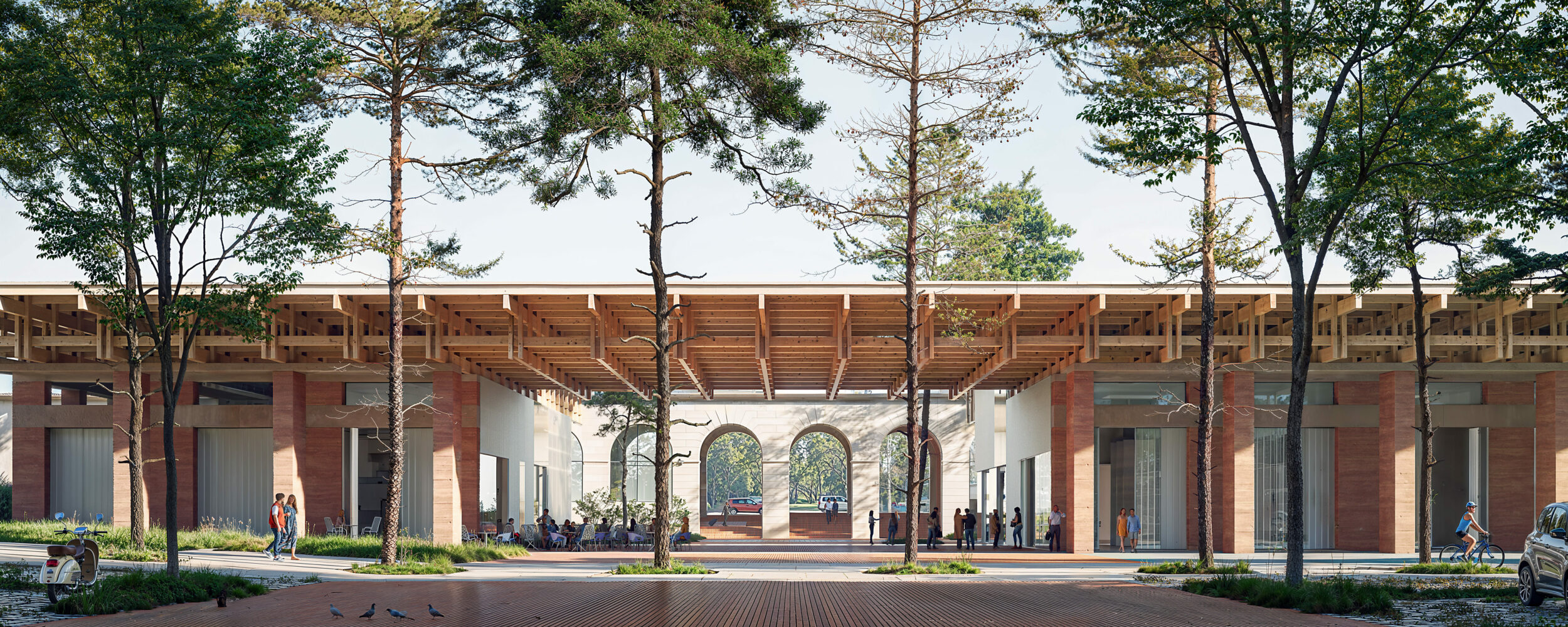
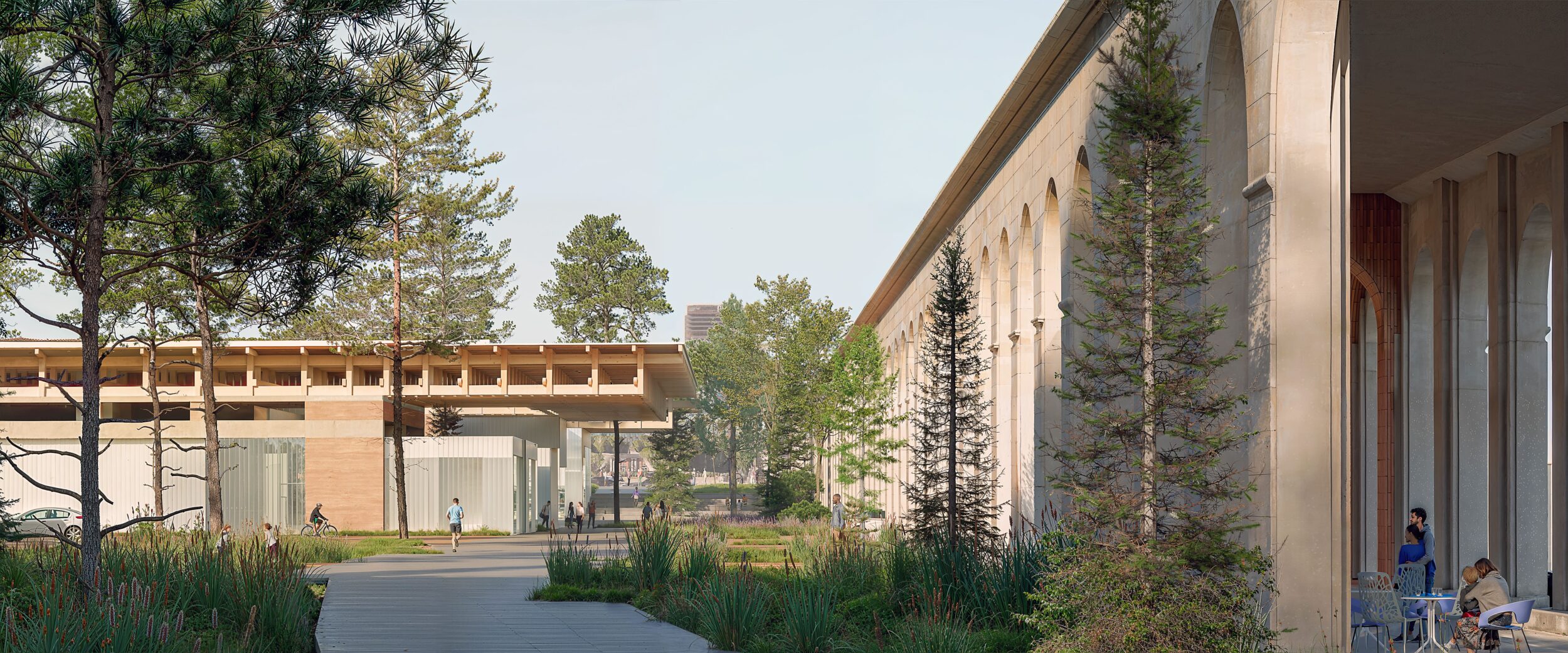
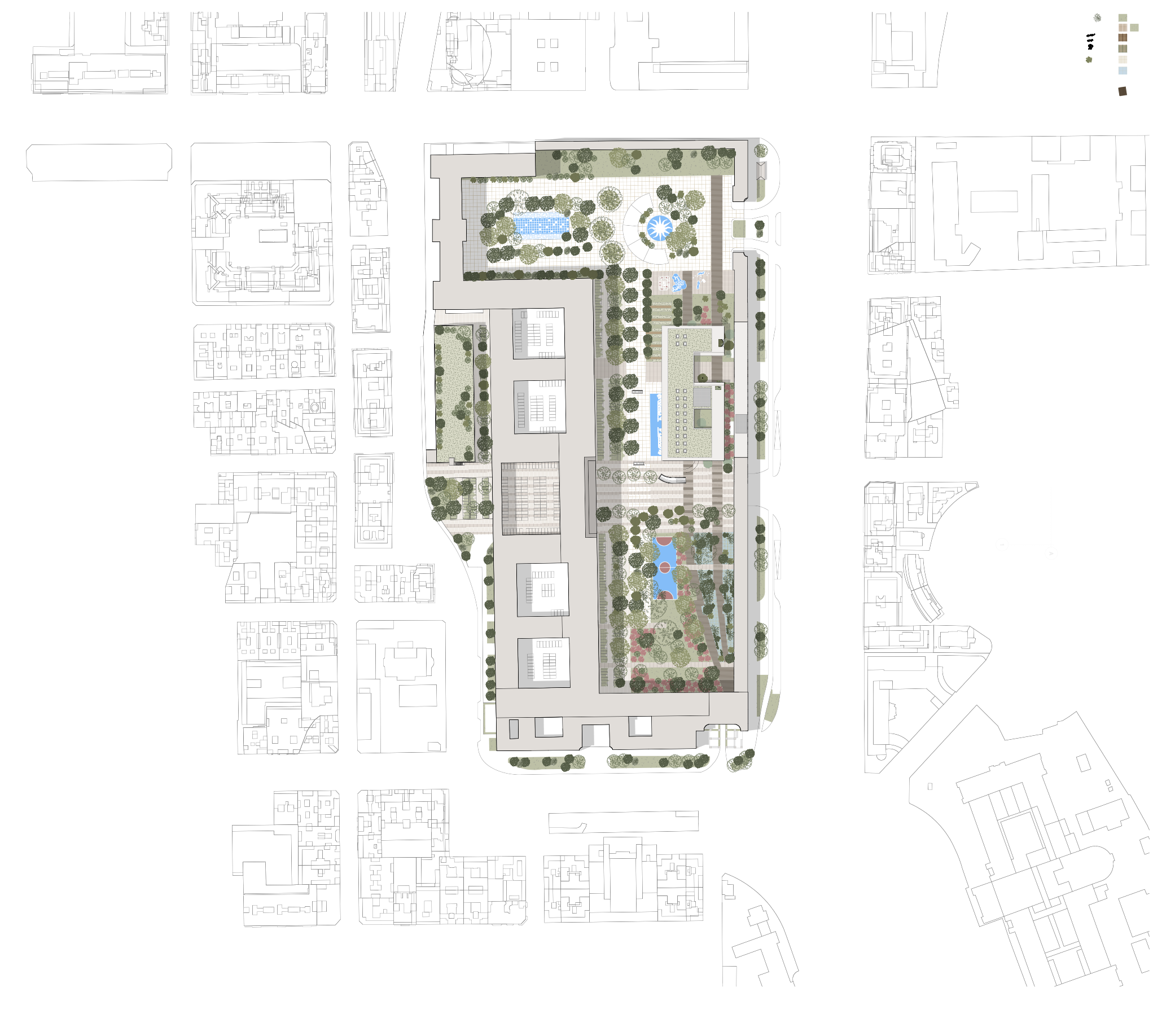
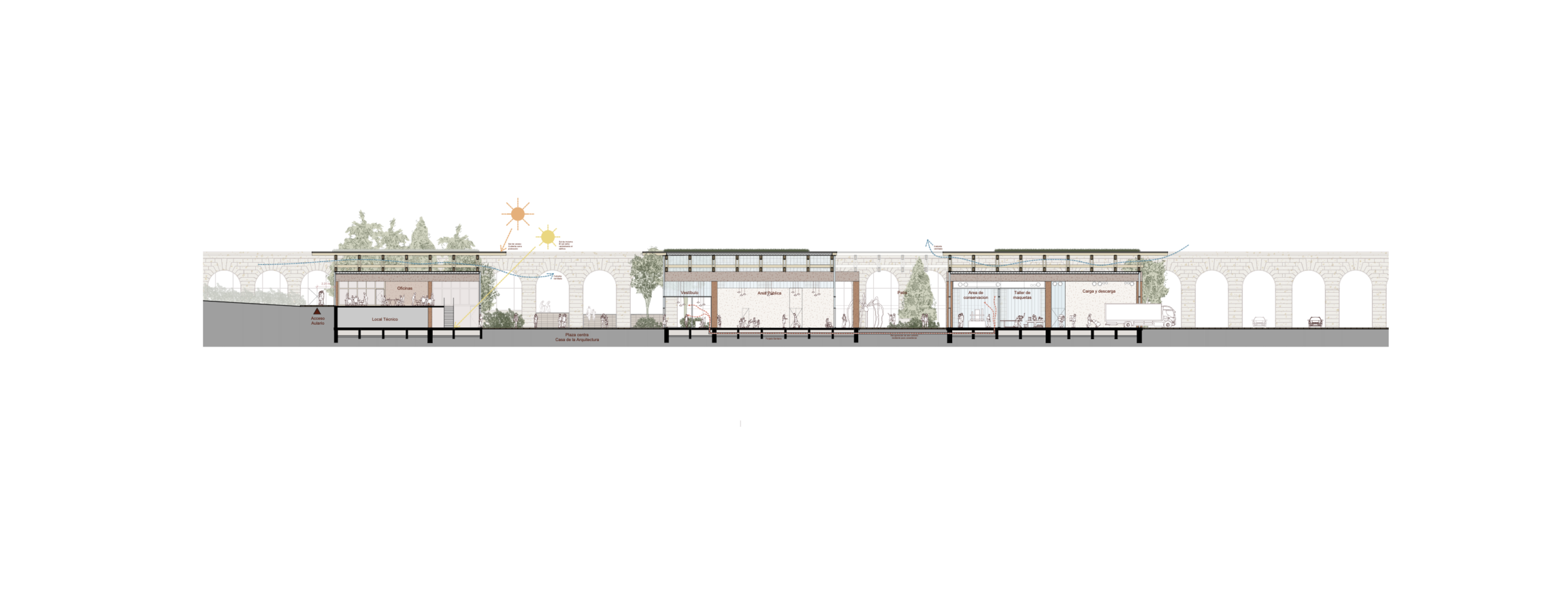
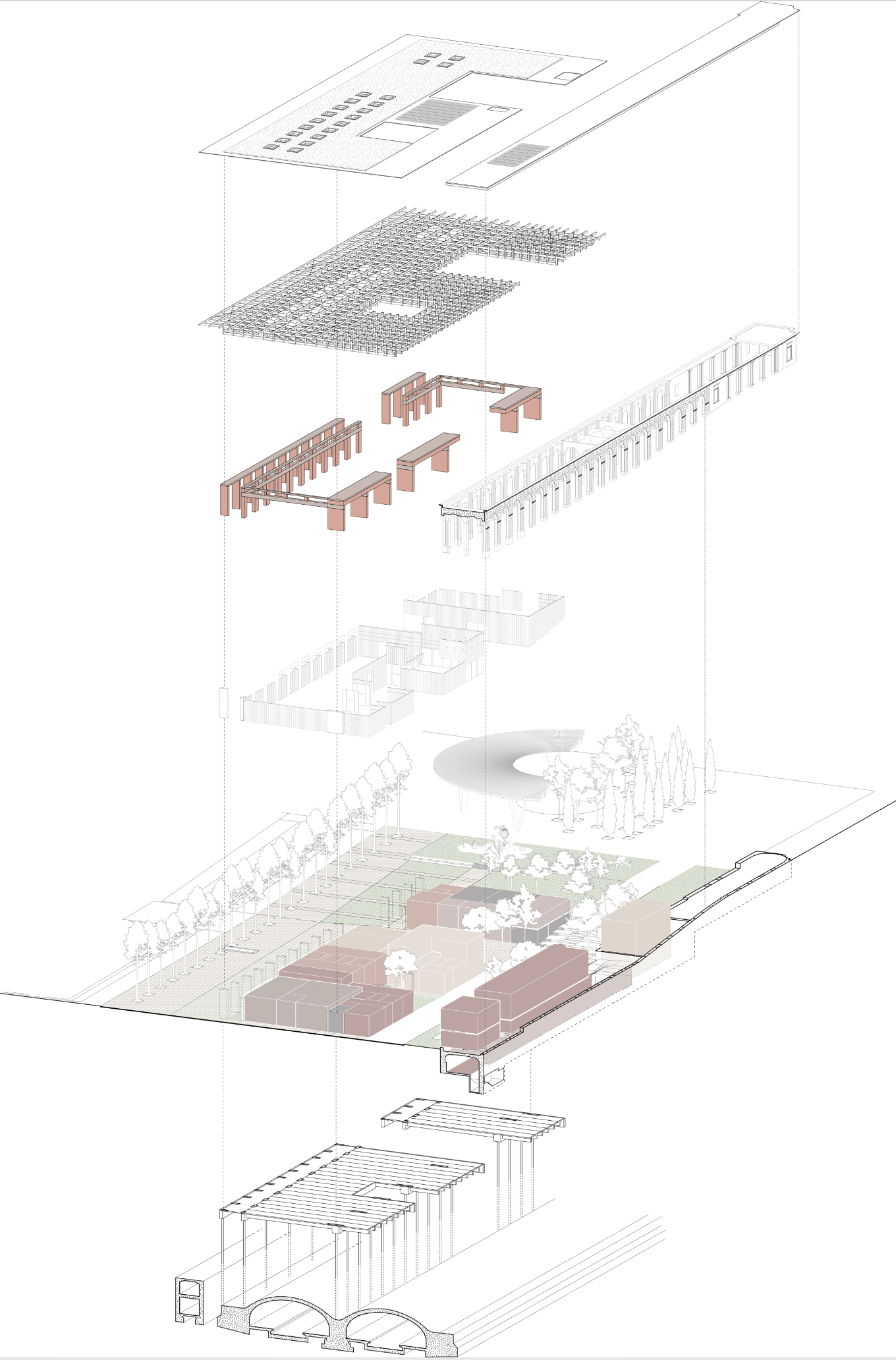
The placement of the Casa de la Arquitectura is dictated by the historical alignments of the site—colonnades, grid patterns (tapis), and railway tracks—while its structural and facade grid dialogues with the existing arches without any physical contact, using a resolutely contemporary language. Three North-South axes organize the project: an interior garden/covered gallery sheltered by a canopy, an internal distribution axis serving public spaces via a courtyard, and a colonnade on the western facade providing sun protection and hosting varied uses. Designed for longevity, the building relies on a modular and adaptable structure capable of evolving radically over time—the Casa de la Arquitectura today, a marketplace or a vast covered square tomorrow—because it is within its adaptability that the true legacy of architecture resides.
The Nuevos Ministerios square, an urban paradox balancing intrinsic qualities and structural flaws—functioning as an immense parking lot despite its position along Madrid’s major North-South axis—is reinterpreted as an urban palimpsest. Here, multiple layers of intervention overlap and intertwine to transform it into a true center of metropolitan attraction.
The placement of the Casa de la Arquitectura is dictated by the historical alignments of the site—colonnades, grid patterns (tapis), and railway tracks—while its structural and facade grid dialogues with the existing arches without any physical contact, using a resolutely contemporary language. Three North-South axes organize the project: an interior garden/covered gallery sheltered by a canopy, an internal distribution axis serving public spaces via a courtyard, and a colonnade on the western facade providing sun protection and hosting varied uses. Designed for longevity, the building relies on a modular and adaptable structure capable of evolving radically over time—the Casa de la Arquitectura today, a marketplace or a vast covered square tomorrow—because it is within its adaptability that the true legacy of architecture resides.