Time Tower
Saint Denis (93)
La Plaine Saint-Denis is undergoing a profound transformation: yesterday’s factories and warehouses have given way to residential and office buildings. However, architecture alone is not enough to foster a high-quality local community life. Our work focused on the connection between built volumes and public space, and their capacity to generate urbanity. Building vertically to free up the ground: this is the driving concept of the project.
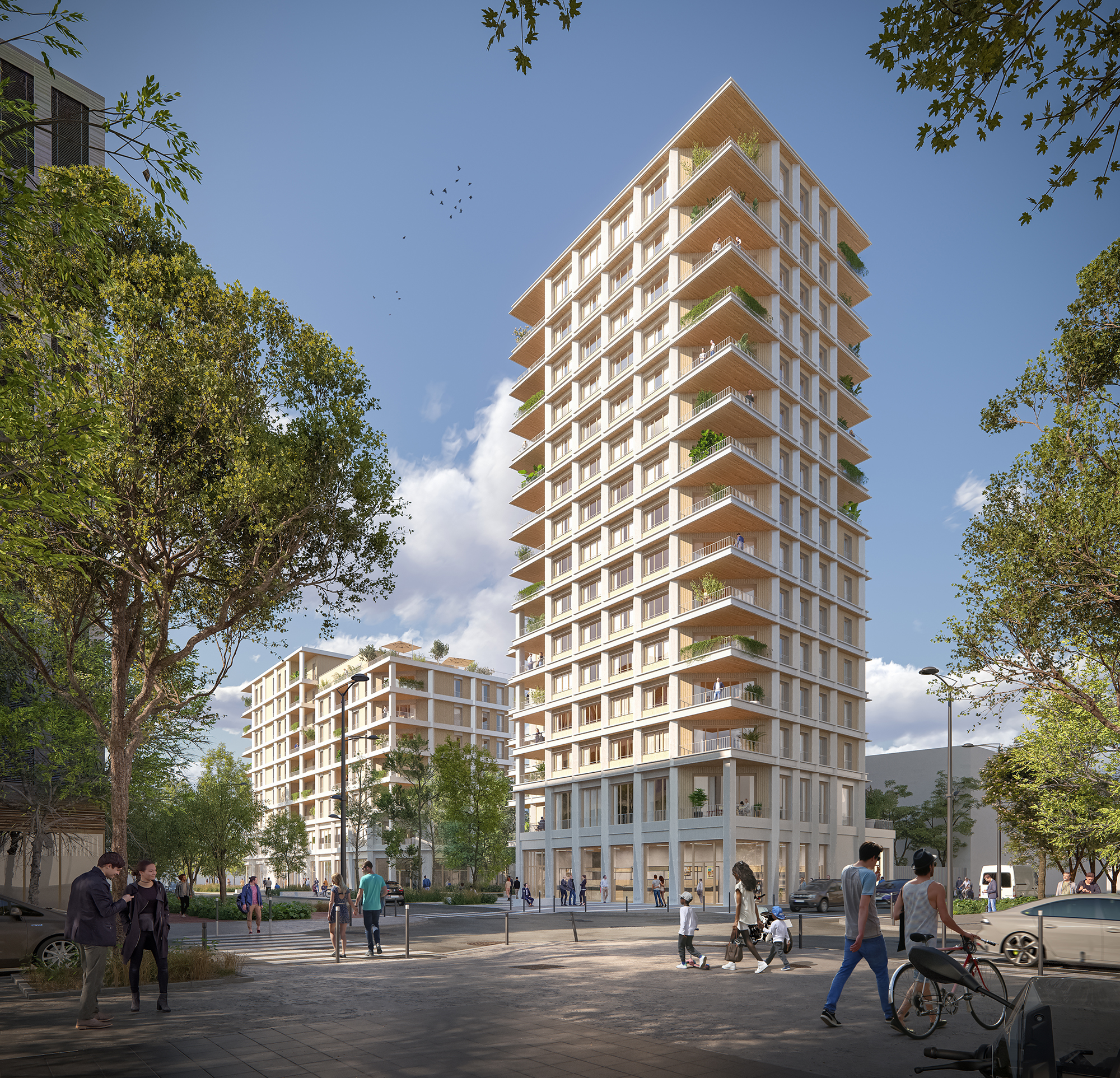
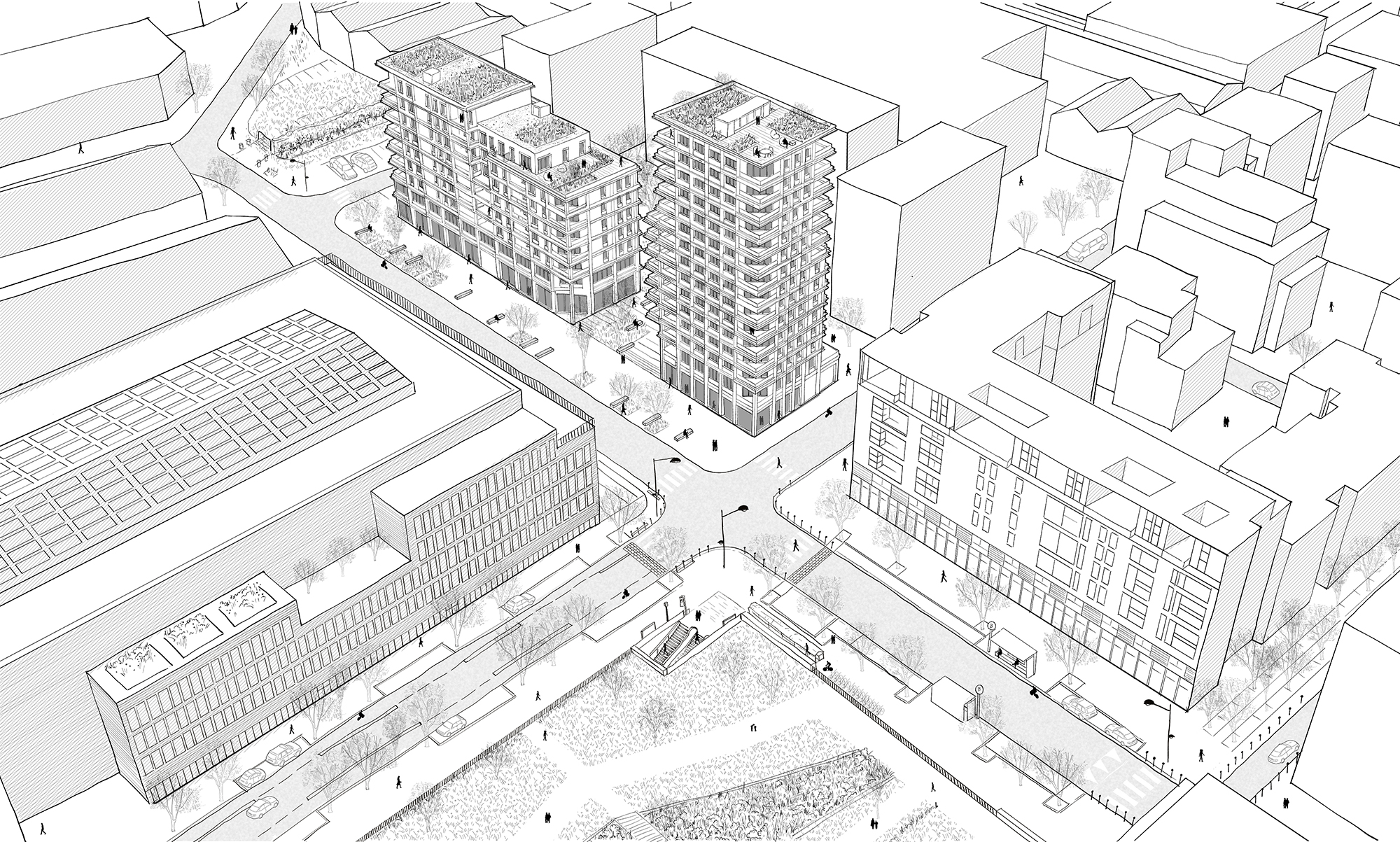
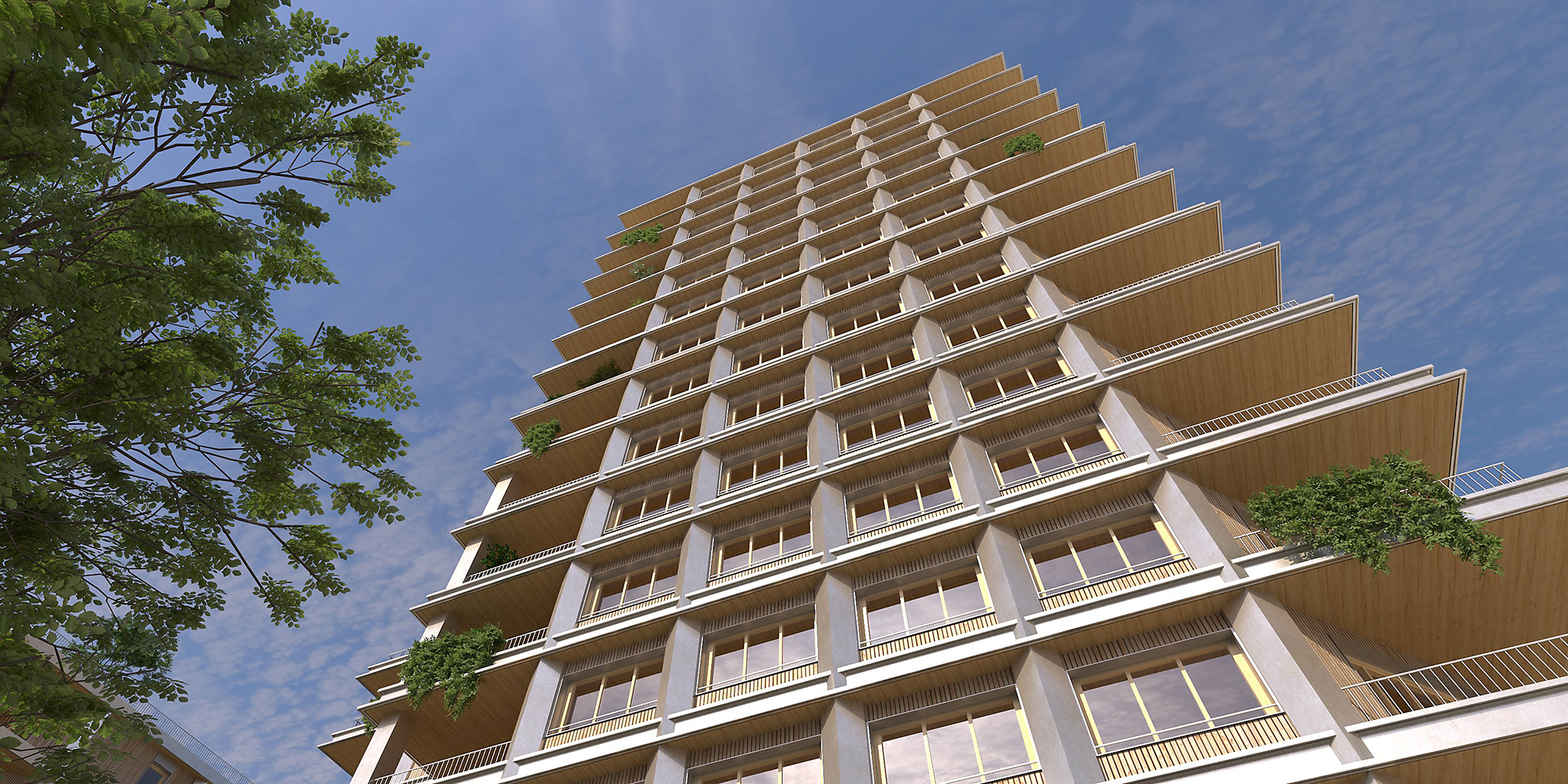
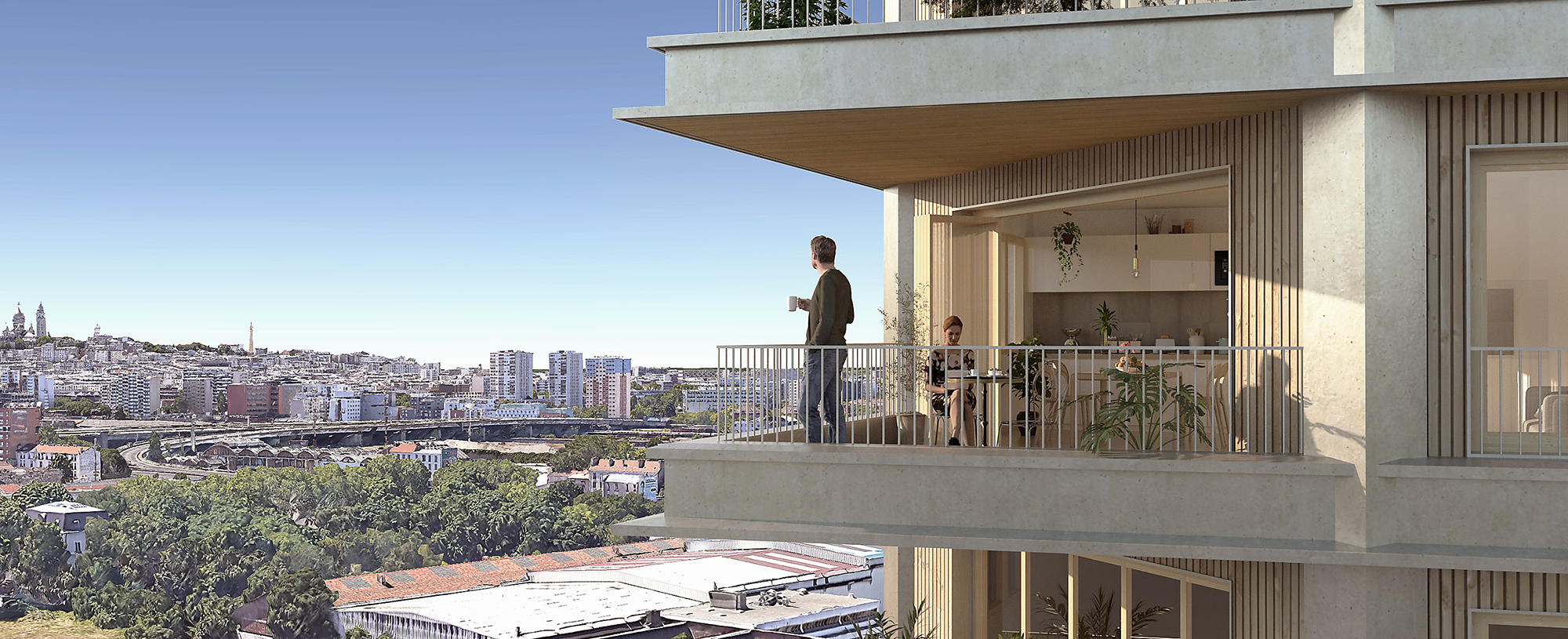
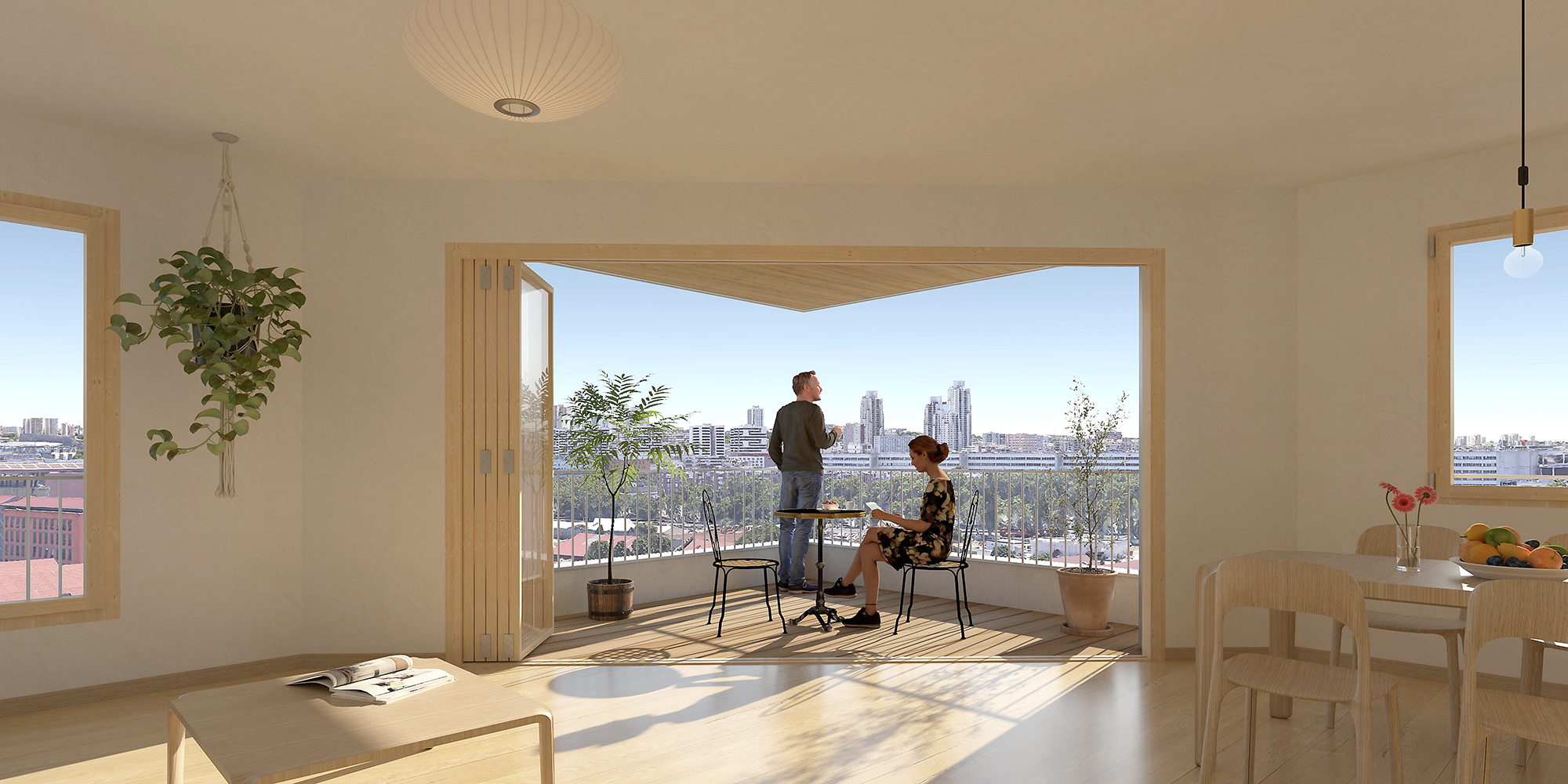
We propose two buildings featuring a timber exoskeleton and a concrete core. To the north, at the intersection of Proudhon and Céréales streets, a slender 14-story tower marks the southwest corner of the Place du Front Populaire, standing out sharply from neighboring masses. The second building, ranging from 6 to 8 stories, aligns with the surrounding building heights (épannelage). Resting on a 6-story plinth, the tower frees up a small square (placette) at its base—much smaller than the Place du Front Populaire, yet complementing it with a new typology of public space.
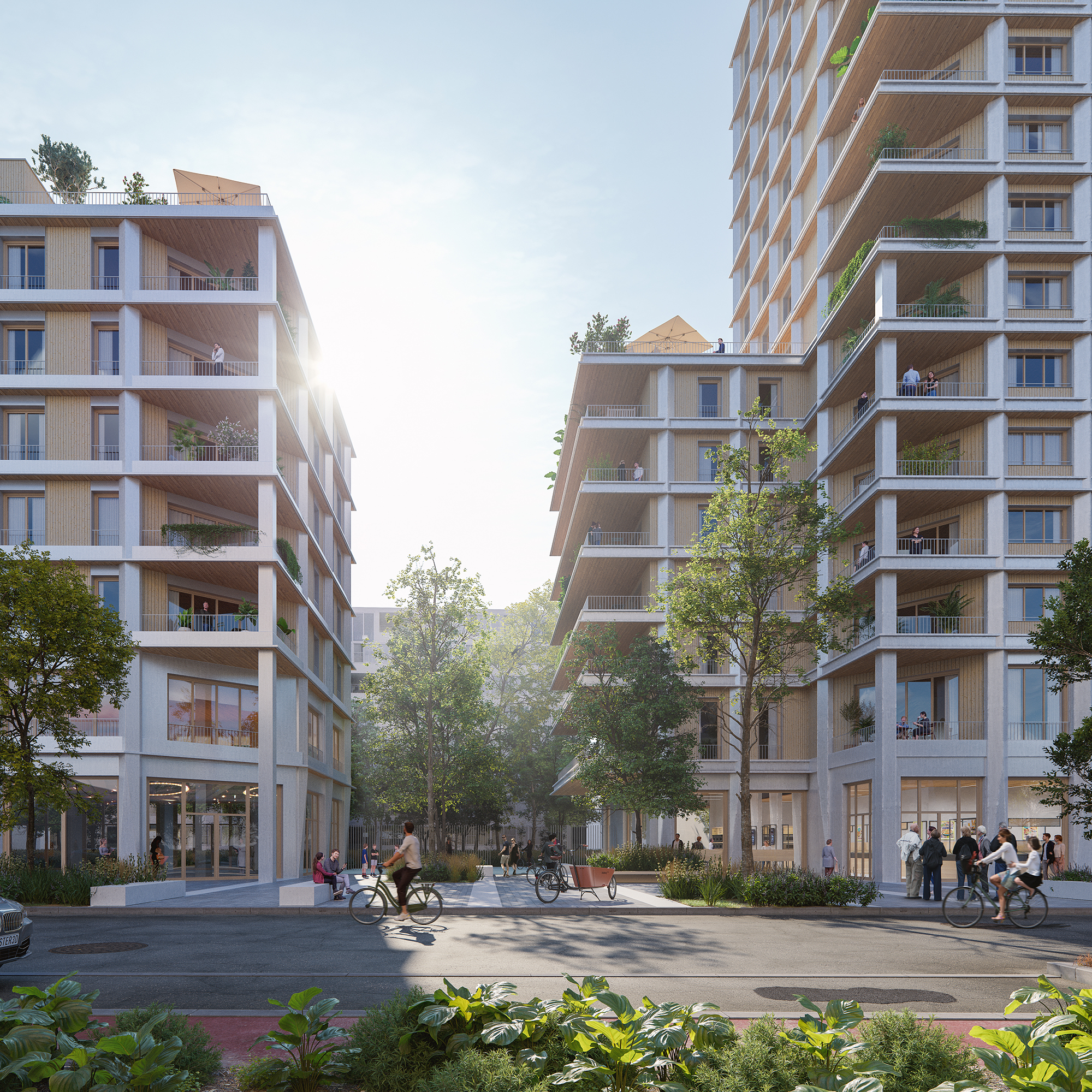
This articulation between large buildings and pocket-sized public spaces—familiar to London, Brussels, or Rotterdam—sketches another way of making cities, distinct from Haussmannian Paris and designed on a more human scale. The small square enhances the street corners: the ground-floor retail space beneath the tower becomes dual-aspect, connecting both squares, while the commercial space on Rue des Céréales now opens onto both the street and the square.
Ney Partners, EODD
La Plaine Saint-Denis is undergoing a profound transformation: yesterday’s factories and warehouses have given way to residential and office buildings. However, architecture alone is not enough to foster a high-quality local community life. Our work focused on the connection between built volumes and public space, and their capacity to generate urbanity. Building vertically to free up the ground: this is the driving concept of the project.
We propose two buildings featuring a timber exoskeleton and a concrete core. To the north, at the intersection of Proudhon and Céréales streets, a slender 14-story tower marks the southwest corner of the Place du Front Populaire, standing out sharply from neighboring masses. The second building, ranging from 6 to 8 stories, aligns with the surrounding building heights (épannelage). Resting on a 6-story plinth, the tower frees up a small square (placette) at its base—much smaller than the Place du Front Populaire, yet complementing it with a new typology of public space.
This articulation between large buildings and pocket-sized public spaces—familiar to London, Brussels, or Rotterdam—sketches another way of making cities, distinct from Haussmannian Paris and designed on a more human scale. The small square enhances the street corners: the ground-floor retail space beneath the tower becomes dual-aspect, connecting both squares, while the commercial space on Rue des Céréales now opens onto both the street and the square.
Ney Partners, EODD